


Dear visitor, welcome to Knowing Islam — a website dedicated to providing reliable and accessible Islamic content at your fingertips. The site includes a collection of beneficial tools and resources: the Holy Quran with recitation and translation, the Noble Mushaf with page-by-page viewing, a step-by-step Umrah guide with supplications, Hisn Al-Muslim with its remembrances and prayers, prayer times and a Qibla compass, alongside introductory materials about Islam inspired by the book “A Brief Illustrated Guide to Understanding Islam” by I. A. Ibrahim. We have made the site available in over twenty-five languages so that its benefit may reach as many people as possible. We ask Allah to make this work sincerely for His noble sake, to benefit everyone who visits it, and we ask that you remember us in your sincere supplications.
Preface
1This book is a brief guide to understanding Islam. It consists of three chapters.
The first chapter, "Some Evidence for the Truth of Islam," answers some important questions which some people ask:
- Is the Qur'an truly the literal word of God, revealed by Him?
- Is Muhammad (PBUH) truly a prophet sent by God?
- Is Islam truly a religion from God?
In this chapter, six kinds of evidence are mentioned:
- The Scientific Miracles in the Holy Qur'an: This section discusses (with illustrations) some recently discovered scientific facts mentioned in the Holy Qur'an, which was revealed fourteen centuries ago.
- The Great Challenge to Produce One Chapter Like the Chapters of the Holy Qur'an: In the Qur'an, God challenged all human beings to produce a single chapter like the chapters of the Qur'an. Ever since the Qur'an was revealed, fourteen centuries ago, until this day, no one has been able to meet this challenge, even though the smallest chapter in the Qur'an (Chapter 108) is only ten words.
- Biblical Prophecies on the Advent of Muhammad (PBUH), the Prophet of Islam: In this section, some of the Biblical prophecies on the advent of the Prophet Muhammad (PBUH) are discussed.
- The Verses in the Qur'an That Mention Future Events Which Later Came to Pass: The Qur'an mentioned future events which later came to pass, for example, the victory of the Romans over the Persians.
- Miracles Performed by the Prophet Muhammad (PBUH): Many miracles were performed by the Prophet Muhammad (PBUH). These miracles were witnessed by many people.
- The Simple Life of Muhammad (PBUH): This clearly indicates that Muhammad (PBUH) was not a false prophet who claimed prophethood to attain material gains, greatness, or power.
The second chapter, "Some Benefits of Islam," mentions some of the benefits that Islam provides for the individual, such as:
- The Door to Eternal Paradise
- Salvation from Hellfire
- Real Happiness and Inner Peace
- Forgiveness for All Previous Sins.
The third chapter, "General Information on Islam," provides general information on Islam, corrects some misconceptions about it, and answers some commonly asked questions, such as:
- What does Islam say about terrorism?
- What is the status of women in Islam?
Six Kinds of Evidence
2
In this chapter, six kinds of evidence are mentioned:
Three Conclusions
3From these six kinds of evidence, we conclude that:
- The Qur'an must be the literal word of God, revealed by Him.
- Muhammad (PBUH) is truly a prophet sent by God.
- Islam is truly a religion from God.
If we would like to know if a religion is true or false, we should not depend on our emotions, feelings, or traditions. Rather, we should depend on our reason and intellect. When God sent the prophets, He supported them with miracles and evidence which proved that they were truly prophets sent by God and hence that the religion they came with is true.
Some Evidence for the Truth of Islam
(1) The Scientific Miracles in the Holy Qur'an
4God has supported His last Prophet Muhammad (PBUH) with many miracles and much evidence which proves that he is a true Prophet sent by God. Also, God has supported His last revealed book, the Holy Qur'an, with many miracles that prove that this Qur'an is the literal word of God, revealed by Him, and that it was not authored by any human being. This chapter discusses some of this evidence.
The Qur'an is the literal word of God, which He revealed to His Prophet Muhammad (PBUH) through the Angel Gabriel. It was memorized by Muhammad (PBUH), who then dictated it to his Companions. They, in turn, memorized it, wrote it down, and reviewed it with the Prophet Muhammad (PBUH). Moreover, the Prophet Muhammad (PBUH) reviewed the Qur'an with the Angel Gabriel once each year and twice in the last year of his life. From the time the Qur'an was revealed, until this day, there has always been a huge number of Muslims who have memorized all of the Qur'an, letter by letter. Some of them have even been able to memorize all of the Qur'an by the age of ten. Not one letter of the Qur'an has been changed over the centuries.
The Qur'an, which was revealed fourteen centuries ago, mentioned facts only recently discovered or proven by scientists. This proves without doubt that the Qur'an must be the literal word of God, revealed by Him to the Prophet Muhammad (PBUH), and that the Qur'an was not authored by Muhammad (PBUH) or by any other human being. This also proves that Muhammad (PBUH) is truly a prophet sent by God. It is beyond reason that anyone fourteen hundred years ago would have known these facts discovered or proven only recently with advanced equipment and sophisticated scientific methods. Some examples follow.
A) The Qur'an on Human Embryonic Development
5In the Holy Qur'an, God speaks about the stages of man's embryonic development:
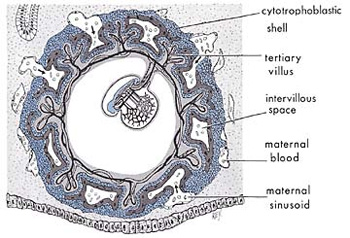
Literally, the Arabic word alaqah has three meanings: (1) leech, (2) suspended thing, and (3) blood clot. In comparing a leech to an embryo in the alaqah stage, we find remarkable similarity between the two.
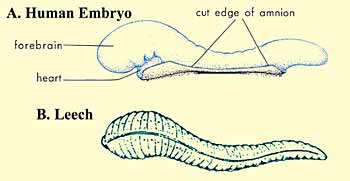
The Alaqah Stage: Leech-Like Appearance
6The embryo at this stage obtains nourishment from the blood of the mother, similar to the leech, which feeds on the blood of others. The second meaning of alaqah is "suspended thing" — this is the suspension of the embryo in the womb of the mother.
Further Reading
The Blood Clot Appearance
7The third meaning of the word alaqah is "blood clot." We find that the external appearance of the embryo and its sacs during the alaqah stage is similar to that of a blood clot. This is due to the presence of relatively large amounts of blood present in the embryo during this stage. Also during this stage, the blood in the embryo does not circulate until the end of the third week. Thus, the embryo at this stage is like a clot of blood.
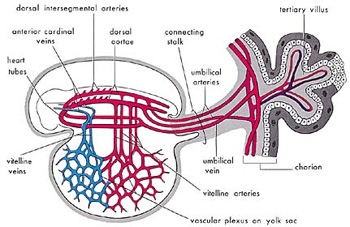
So the three meanings of the word alaqah correspond accurately to the descriptions of the embryo at the alaqah stage.
The Mudghah (Chewed Substance) Stage
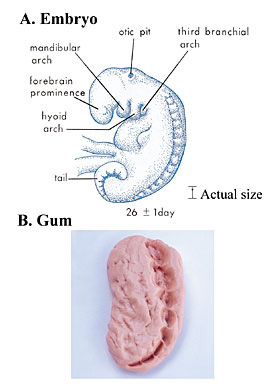
8The next stage mentioned in the verse is the mudghah stage. The Arabic word mudghah means "chewed substance." If one were to take a piece of gum and chew it and then compare it with an embryo at the mudghah stage, we would conclude that the embryo at the mudghah stage is similar in appearance to a chewed substance. This is because of the somites at the back of the embryo that "somewhat resemble teethmarks in a chewed substance."
Further Reading
How could Muhammad (PBUH) have possibly known all this about fourteen hundred years ago, when scientists have only recently discovered this using advanced equipment and powerful microscopes which did not exist at that time?
Leeuwenhoek and Hamm were the first scientists to observe human sperm cells (spermatozoa) using an improved microscope in 1677 — more than 1000 years after Muhammad (PBUH). They mistakenly thought that the sperm cell contained a miniature preformed human being that grew when it was deposited in the female genital tract.
Professor Keith Moore on the Qur'an
9Professor Emeritus Keith L. Moore is one of the world's most prominent scientists in the fields of anatomy and embryology and is the author of the book entitled The Developing Human, which has been translated into eight languages. This book is a scientific reference work and was chosen by a special committee in the United States as the best book authored by one person. Dr. Keith Moore is Professor Emeritus of Anatomy and Cell Biology at the University of Toronto, Toronto, Canada. There, he was Associate Dean of Basic Sciences at the Faculty of Medicine and for 8 years was the Chairman of the Department of Anatomy. In 1984, he received the most distinguished award presented in the field of anatomy in Canada, the J.C.B. Grant Award from the Canadian Association of Anatomists. He has directed many international associations, such as the Canadian and American Association of Anatomists and the Council of the Union of Biological Sciences.
In 1981, during the Seventh Medical Conference in Dammam, Saudi Arabia, Professor Moore said:
Consequently, Professor Moore was asked the following question: "Does this mean that you believe that the Qur'an is the word of God?" He replied: "I find no difficulty in accepting this."
During one conference, Professor Moore stated: "....Because the staging of human embryos is complex, owing to the continuous process of change during development, it is proposed that a new system of classification could be developed using the terms mentioned in the Qur'an and Sunnah (what Muhammad (PBUH) said, did, or approved of). The proposed system is simple, comprehensive, and conforms with present embryological knowledge."
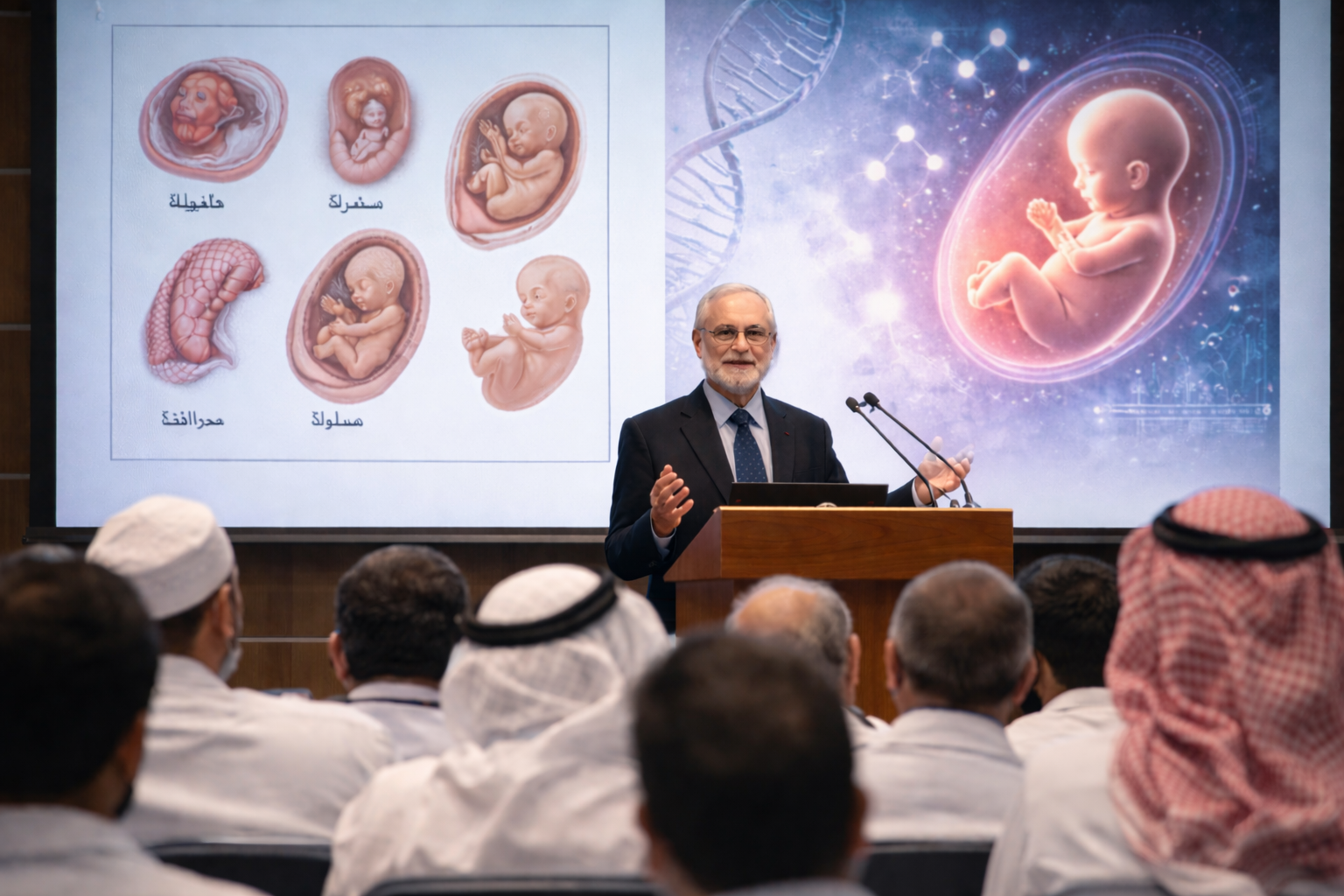
Professor Moore proposed that a new system of classification could be developed using the terms mentioned in the Qur'an and Sunnah. The proposed system is simple, comprehensive, and conforms with present embryological knowledge.
The intensive studies of the Qur'an and hadeeth (reliably transmitted reports by the Prophet Muhammad's (PBUH) companions of what he said, did, or approved of) in the last four years have revealed a system for classifying human embryos that is amazing since it was recorded in the seventh century A.D. Although Aristotle, the founder of the science of embryology, realized that chick embryos developed in stages from his studies of hen's eggs in the fourth century B.C., he did not give any details about these stages. As far as it is known from the history of embryology, little was known about the staging and classification of human embryos until the twentieth century. For this reason, the descriptions of the human embryo in the Qur'an cannot be based on scientific knowledge in the seventh century. The only reasonable conclusion is: these descriptions were revealed to Muhammad from God. He could not have known such details because he was an illiterate man with absolutely no scientific training.
B) The Qur'an on Mountains
10A book entitled Earth is a basic reference textbook in many universities around the world. One of its two authors is Professor Emeritus Frank Press. He was the Science Advisor to former US President Jimmy Carter, and for 12 years was the President of the National Academy of Sciences, Washington, DC. His book says that mountains have underlying roots. These roots are deeply embedded in the ground, thus, mountains have a shape like a peg.
This is how the Qur'an has described mountains. God has said in the Qur'an:
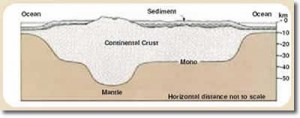
Mountains as Stabilizers
11Modern earth sciences have proven that mountains have deep roots under the surface of the ground and that these roots can reach several times their elevations above the surface of the ground. So the most suitable word to describe mountains on the basis of this information is the word 'peg,' since most of a properly set peg is hidden under the surface of the ground.
The history of science tells us that the theory of mountains having deep roots was introduced only in 1865 by the Astronomer Royal, Sir George Airy.
Mountains also play an important role in stabilizing the crust of the earth. They hinder the shaking of the earth. God has said in the Qur'an:
Likewise, the modern theory of plate tectonics holds that mountains work as stabilizers for the earth. This knowledge about the role of mountains as stabilizers for the earth has just begun to be understood in the framework of plate tectonics since the late 1960's.
Could anyone during the time of the Prophet Muhammad (PBUH) have known of the true shape of mountains? Could anyone imagine that the solid massive mountain which he sees before him actually extends deep into the earth and has a root, as scientists affirm? Modern geology has confirmed the truth of the Qur'anic verses.
C) The Qur'an on the Origin of the Universe
12The science of modern cosmology, observational and theoretical, clearly indicates that, at one point in time, the whole universe was nothing but a cloud of 'smoke' (i.e. an opaque highly dense and hot gaseous composition). This is one of the undisputed principles of standard modern cosmology. Scientists now can observe new stars forming out of the remnants of that 'smoke.' The illuminating stars we see at night were, just as was the whole universe, in that 'smoke' material. God has said in the Qur'an:
Because the earth and the heavens above (the sun, the moon, stars, planets, galaxies, etc.) have been formed from this same 'smoke,' we conclude that the earth and the heavens were one connected entity. Then out of this homogeneous 'smoke,' they formed and separated from each other. God has said in the Qur'an:
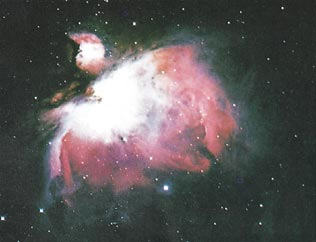
The Heavens and Earth Were One Entity
13Dr. Alfred Kroner is one of the world's renowned geologists. He is Professor of Geology and the Chairman of the Department of Geology at the Institute of Geosciences, Johannes Gutenberg University, Mainz, Germany. He said:
He also said: "Somebody who did not know something about nuclear physics fourteen hundred years ago could not, I think, be in a position to find out from his own mind, for instance, that the earth and the heavens had the same origin."
D) The Qur'an on the Cerebrum
14God has said in the Qur'an about one of the evil unbelievers who forbade the Prophet Muhammad (PBUH) from praying at the Kaaba:
Why did the Qur'an describe the front of the head as being lying and sinful? Why didn't the Qur'an say that the person was lying and sinful? What is the relationship between the front of the head and lying and sinfulness?
If we look into the skull at the front of the head, we will find the prefrontal area of the cerebrum. What does physiology tell us about its function? A book entitled Essentials of Anatomy & Physiology says about this area: "The motivation and the foresight to plan and initiate movements occur in the anterior portion of the frontal lobes, the prefrontal area. This is a region of association cortex..." Also the book says: "In relation to its involvement in motivation, the prefrontal area is also thought to be the functional center for aggression...."
So, this area of the cerebrum is responsible for planning, motivating, and initiating good and sinful behavior and is responsible for the telling of lies and the speaking of truth. Thus, it is proper to describe the front of the head as lying and sinful when someone lies or commits a sin, as the Qur'an has said: "...A lying, sinful naseyah (front of the head)!"
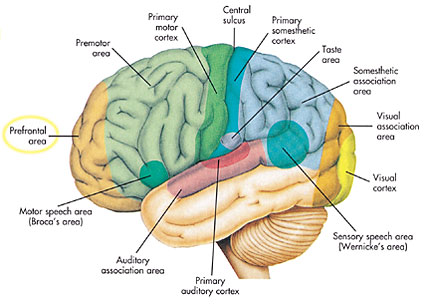
Scientists have only discovered these functions of the prefrontal area in the last sixty years, according to Professor Keith L. Moore. The Qur'an mentioned this fourteen centuries ago.
E) The Qur'an on Seas and Rivers
15Modern Science has discovered that in the places where two different seas meet, there is a barrier between them. This barrier divides the two seas so that each sea has its own temperature, salinity, and density. For example, Mediterranean sea water is warm, saline, and less dense, compared to Atlantic ocean water. When Mediterranean sea water enters the Atlantic over the Gibraltar sill, it moves several hundred kilometers into the Atlantic at a depth of about 1000 meters with its own warm, saline, and less dense characteristics. The Mediterranean water stabilizes at this depth.
Although there are large waves, strong currents, and tides in these seas, they do not mix or transgress this barrier.
The Holy Qur'an mentioned that there is a barrier between two seas that meet and that they do not transgress. God has said:
But when the Qur'an speaks about the divider between fresh and salt water, it mentions the existence of "a forbidding partition" with the barrier. God has said in the Qur'an:
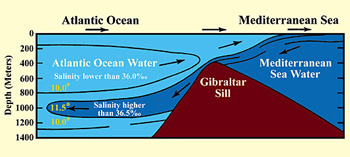
Fresh and Salt Water
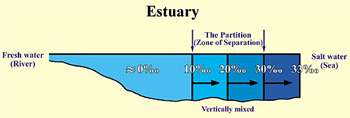
16Modern science has discovered that in estuaries, where fresh (sweet) and salt water meet, the situation is somewhat different. What distinguishes fresh water from salt water in estuaries is a "pycnocline zone with a marked density discontinuity separating the two layers." This partition (zone of separation) has a different salinity from the fresh water and from the salt water.
Further Reading
One may ask, why did the Qur'an mention the partition when speaking about the divider between fresh and salt water, but did not mention it when speaking about the divider between the two seas?
This information has been discovered only recently, using advanced equipment to measure temperature, salinity, density, oxygen dissolubility, etc. The human eye cannot see the difference between the two seas that meet, rather the two seas appear to us as one homogeneous sea. Likewise, the human eye cannot see the division of water in estuaries into the three kinds: fresh water, salt water, and the partition (zone of separation).
F) The Qur'an on Deep Seas and Internal Waves
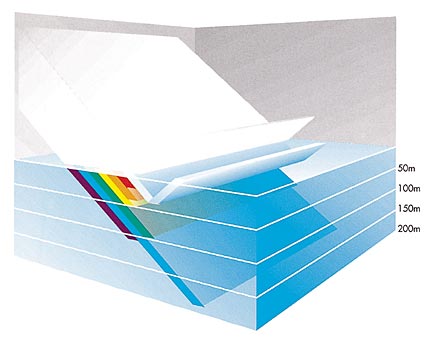
17This verse mentions the darkness found in deep seas and oceans, where if a man stretches out his hand, he cannot see it. The darkness in deep seas and oceans is found around a depth of 200 meters and below. At this depth, there is almost no light. Below a depth of 1000 meters there is no light at all. Human beings are not able to dive more than forty meters without the aid of submarines or special equipment. Human beings cannot survive unaided in the deep dark part of the oceans, such as at a depth of 200 meters.
Scientists have recently discovered this darkness by means of special equipment and submarines that have enabled them to dive into the depths of the oceans.
Internal Waves
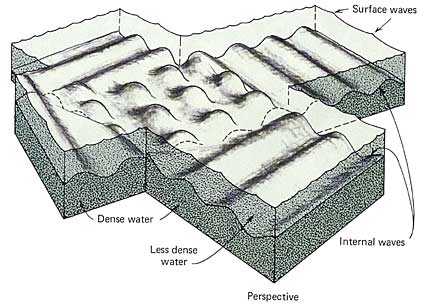
18We can also understand from the following sentences in the previous verse, "...in a deep sea. It is covered by waves, above which are waves, above which are clouds....", that the deep waters of seas and oceans are covered by waves, and above these waves are other waves. It is clear that the second set of waves are the surface waves that we see, because the verse mentions that above the second waves there are clouds. But what about the first waves? Scientists have recently discovered that there are internal waves which "occur on density interfaces between layers of different densities."
The internal waves cover the deep waters of seas and oceans because the deep waters have a higher density than the waters above them. Internal waves act like surface waves. They can also break, just like surface waves. Internal waves cannot be seen by the human eye, but they can be detected by studying temperature or salinity changes at a given location.
G) The Qur'an on Clouds
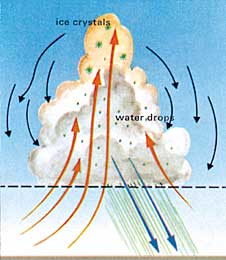
19Scientists have studied cloud types and have realized that rain clouds are formed and shaped according to definite systems and certain steps connected with certain types of wind and clouds.
One kind of rain cloud is the cumulonimbus cloud. Meteorologists have studied how cumulonimbus clouds are formed and how they produce rain, hail, and lightning.
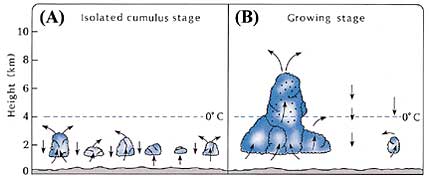
They have found that cumulonimbus clouds go through the following steps to produce rain:
1) The clouds are pushed by the wind: Cumulonimbus clouds begin to form when wind pushes some small pieces of clouds (cumulus clouds) to an area where these clouds converge.
2) Joining: Then the small clouds join together forming a larger cloud.
3) Stacking: When the small clouds join together, updrafts within the larger cloud increase. The updrafts near the center of the cloud are stronger than those near the edges. These updrafts cause the cloud body to grow vertically, so the cloud is stacked up. This vertical growth causes the cloud body to stretch into cooler regions of the atmosphere, where drops of water and hail formulate and begin to grow larger and larger. When these drops of water and hail become too heavy for the updrafts to support them, they begin to fall from the cloud as rain, hail, etc.
Cloud Formation in the Qur'an
20God has said in the Qur'an:
Meteorologists have only recently come to know these details of cloud formation, structure, and function by using advanced equipment like planes, satellites, computers, balloons, and other equipment, to study wind and its direction, to measure humidity and its variations, and to determine the levels and variations of atmospheric pressure.
The preceding verse, after mentioning clouds and rain, speaks about hail and lightning:
Hail and Lightning
21Meteorologists have found that these cumulonimbus clouds, that shower hail, reach a height of 25,000 to 30,000 ft (4.7 to 5.7 miles), like mountains, as the Qur'an said: "...And He sends down hail from mountains (clouds) in the sky..."
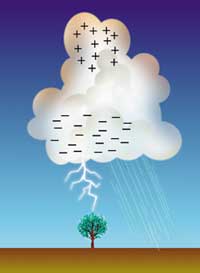
This verse may raise a question. Why does the verse say "its lightning" in a reference to the hail? Does this mean that hail is the major factor in producing lightning? Let us see what the book entitled Meteorology Today says about this. It says that a cloud becomes electrified as hail falls through a region in the cloud of supercooled droplets and ice crystals. As liquid droplets collide with a hailstone, they freeze on contact and release latent heat. This keeps the surface of the hailstone warmer than that of the surrounding ice crystals. When the hailstone comes in contact with an ice crystal, an important phenomenon occurs: electrons flow from the colder object toward the warmer object. Hence, the hailstone becomes negatively charged. The same effect occurs when supercooled droplets come in contact with a hailstone and tiny splinters of positively charged ice break off. These lighter positively charged particles are then carried to the upper part of the cloud by updrafts. The hail, left with a negative charge, falls towards the bottom of the cloud, thus the lower part of the cloud becomes negatively charged. These negative charges are then discharged as lightning. We conclude from this that hail is the major factor in producing lightning.
Further Reading
This information on lightning was discovered recently. Until 1600 AD, Aristotle's ideas on meteorology were dominant. For example, he said that the atmosphere contains two kinds of exhalation, moist and dry. He also said that thunder is the sound of the collision of the dry exhalation with the neighboring clouds, and lightning is the inflaming and burning of the dry exhalation with a thin and faint fire. These are some of the ideas on meteorology that were dominant at the time of the Qur'an's revelation, fourteen centuries ago.
H) Scientists' Comments on the Scientific Miracles
22
The following are some comments of scientists on the scientific miracles in the Holy Qur'an. All of these comments have been taken from the videotape entitled This is the Truth. In this videotape, you can see and hear the scientists while they are giving the following comments.
Dr. T. V. N. Persaud
23Dr. T. V. N. Persaud is Professor of Anatomy, Professor of Pediatrics and Child Health, and Professor of Obstetrics, Gynecology, and Reproductive Sciences at the University of Manitoba, Winnipeg, Manitoba, Canada. There, he was the Chairman of the Department of Anatomy for 16 years. He is well-known in his field. He is the author or editor of 22 textbooks and has published over 181 scientific papers. In 1991, he received the most distinguished award presented in the field of anatomy in Canada, the J.C.B. Grant Award from the Canadian Association of Anatomists. When he was asked about the scientific miracles in the Qur'an which he has researched, he stated the following:
Professor Persaud has included some Qur'anic verses and sayings of the Prophet Muhammad (PBUH) in some of his books. He has also presented these verses and sayings of the Prophet Muhammad (PBUH) at several conferences.
Dr. Joe Leigh Simpson
24Dr. Joe Leigh Simpson is the Chairman of the Department of Obstetrics and Gynecology, Professor of Obstetrics and Gynecology, and Professor of Molecular and Human Genetics at the Baylor College of Medicine, Houston, Texas, USA. Formerly, he was Professor of Ob-Gyn and the Chairman of the Department of Ob-Gyn at the University of Tennessee, Memphis, Tennessee, USA. He was also the President of the American Fertility Society. He has received many awards, including the Association of Professors of Obstetrics and Gynecology Public Recognition Award in 1992.
Professor Simpson studied the following two sayings of the Prophet Muhammad (PBUH):
He studied these two sayings of the Prophet Muhammad (PBUH) extensively, noting that the first forty days constitute a clearly distinguishable stage of embryo-genesis. He was particularly impressed by the absolute precision and accuracy of those sayings of the Prophet Muhammad (PBUH). Then, during one conference, he gave the following opinion:
Dr. E. Marshall Johnson
25Dr. E. Marshall Johnson is Professor Emeritus of Anatomy and Developmental Biology at Thomas Jefferson University, Philadelphia, Pennsylvania, USA. There, for 22 years he was Professor of Anatomy, the Chairman of the Department of Anatomy, and the Director of the Daniel Baugh Institute. He was also the President of the Teratology Society. He has authored more than 200 publications. In 1981, during the Seventh Medical Conference in Dammam, Saudi Arabia, Professor Johnson said in the presentation of his research paper:
Also he said: "As a scientist, I can only deal with things which I can specifically see. I can understand embryology and developmental biology. I can understand the words that are translated to me from the Qur'an. As I gave the example before, if I were to transpose myself into that era, knowing what I knew today and describing things, I could not describe the things which were described. I see no evidence for the fact to refute the concept that this individual, Muhammad, had to be developing this information from some place. So I see nothing here in conflict with the concept that divine intervention was involved in what he was able to write."
Dr. William W. Hay
26Dr. William W. Hay is a well-known marine scientist. He is Professor of Geological Sciences at the University of Colorado, Boulder, Colorado, USA. He was formerly the Dean of the Rosenstiel School of Marine and Atmospheric Science at the University of Miami, Miami, Florida, USA. After a discussion with Professor Hay about the Qur'an's mention of recently discovered facts on seas, he said:
And when he was asked about the source of the Qur'an, he replied: "Well, I would think it must be the divine being."
Dr. Gerald C. Goeringer
27Dr. Gerald C. Goeringer is Course Director and Associate Professor of Medical Embryology at the Department of Cell Biology, School of Medicine, Georgetown University, Washington, DC, USA. During the Eighth Saudi Medical Conference in Riyadh, Saudi Arabia, Professor Goeringer stated the following in the presentation of his research paper:
Dr. Yoshihide Kozai
28Professor Tejatat Tejasen
29Professor Tejatat Tejasen is the Chairman of the Department of Anatomy at Chiang Mai University, Chiang Mai, Thailand. Previously, he was the Dean of the Faculty of Medicine of the same university. During the Eighth Saudi Medical Conference in Riyadh, Saudi Arabia, Professor Tejasen stood up and said:
Conclusion: The Scientific Miracles
30
After all these examples we have seen about the scientific miracles in the Holy Qur'an and all these scientists' comments on this, let us ask ourselves these questions:
- Could it be a coincidence that all this recently discovered scientific information from different fields was mentioned in the Qur'an, which was revealed fourteen centuries ago?
- Could this Qur'an have been authored by Muhammad (PBUH) or by any other human being?
The only possible answer is that this Qur'an must be the literal word of God, revealed by Him.
(2) The Great Challenge
31
God has said in the Qur'an:
Ever since the Qur'an was revealed, fourteen centuries ago, no one has been able to produce a single chapter like the chapters of the Qur'an in their beauty, eloquence, splendor, wise legislation, true information, true prophecy, and other perfect attributes. The smallest chapter in the Qur'an (Chapter 108) is only ten words, yet no one has ever been able to meet this challenge.
Some of the disbelieving Arabs who were enemies of Muhammad (PBUH) tried to meet this challenge to prove that Muhammad (PBUH) was not a true prophet, but they failed to do so. This failure was despite the fact that the Qur'an was revealed in their own language and dialect and that the Arabs at the time of Muhammad (PBUH) were a very eloquent people who used to compose beautiful and excellent poetry, still read and appreciated today.
(3) Biblical Prophecies on the Advent of Muhammad
32
The Biblical prophecies on the advent of the Prophet Muhammad (PBUH) are evidence of the truth of Islam for people who believe in the Bible. In Deuteronomy 18, Moses stated that God told him:
"I will raise up for them a prophet like you from among their brothers; I will put my words in his mouth, and he will tell them everything I command him. If anyone does not listen to my words that the prophet speaks in my name, I myself will call him to account." (Deuteronomy 18:18-19)
This prophecy must have three characteristics: 1) Like Moses, 2) From the brothers of the Israelites (i.e. the Ishmaelites), 3) God will put His words in his mouth.
A Prophet Like Moses
33There were hardly any two prophets who were so much alike as Moses and Muhammad (PBUH). Both were given a comprehensive law and code of life. Both encountered their enemies and were victorious in miraculous ways. Both were accepted as prophets and statesmen. Both migrated following conspiracies to assassinate them.
Analogies between Moses and Jesus overlook not only the above similarities but other crucial ones as well. These include the natural birth, the family life, and the death of Moses and Muhammad (PBUH) but not that of Jesus. Moreover, Jesus was regarded by his followers as the Son of God and not exclusively as a prophet of God, as Moses and Muhammad (PBUH) were and as Muslims believe Jesus was. So, this prophecy refers to Muhammad (PBUH) and not to Jesus, because Muhammad (PBUH) is more like Moses than Jesus.
Also, one notices from the Gospel of John that the Jews were waiting for the fulfillment of three distinct prophecies: 1) The coming of Christ, 2) The coming of Elijah, 3) The coming of the Prophet. This is obvious from the three questions that were posed to John the Baptist: "Now this was John's testimony, when the Jews of Jerusalem sent priests and Levites to ask him who he was. He did not fail to confess, but confessed freely, 'I am not the Christ.' They asked him, 'Then who are you? Are you Elijah?' He said, 'I am not.' 'Are you the Prophet?' He answered, 'No.'" (John 1:19-21). If we look in a Bible with cross-references, we will find in the marginal notes where the words "the Prophet" occur in John 1:21, that these words refer to the prophecy of Deuteronomy 18:15 and 18:18. We conclude from this that Jesus Christ is not the prophet mentioned in Deuteronomy 18:18.
Abraham had two sons, Ishmael and Isaac (Genesis 21). Ishmael became the grandfather of the Arab nation, and Isaac became the grandfather of the Jewish nation. The prophet spoken of was not to come from among the Jews themselves, but from among their brothers, i.e. the Ishmaelites. Muhammad (PBUH), a descendant of Ishmael, is indeed this prophet.
Also, Isaiah 42:1-13 speaks of the servant of God, His "chosen one" and "messenger" who will bring down a law. Verse 11 connects that awaited messenger with the descendants of Kedar — the second son of Ishmael, the ancestor of the Prophet Muhammad (PBUH).
The words of God (the Holy Qur'an) were truly put into Muhammad's (PBUH) mouth. God sent the Angel Gabriel to teach Muhammad (PBUH) the exact words of God (the Holy Qur'an) and asked him to dictate them to the people as he heard them. The words are therefore not his own. They did not come from his own thoughts, but were put into his mouth by the Angel Gabriel.
During the life time of Muhammad (PBUH), and under his supervision, these words were then memorized and written by his companions.
(4) Verses on Future Events That Came to Pass
34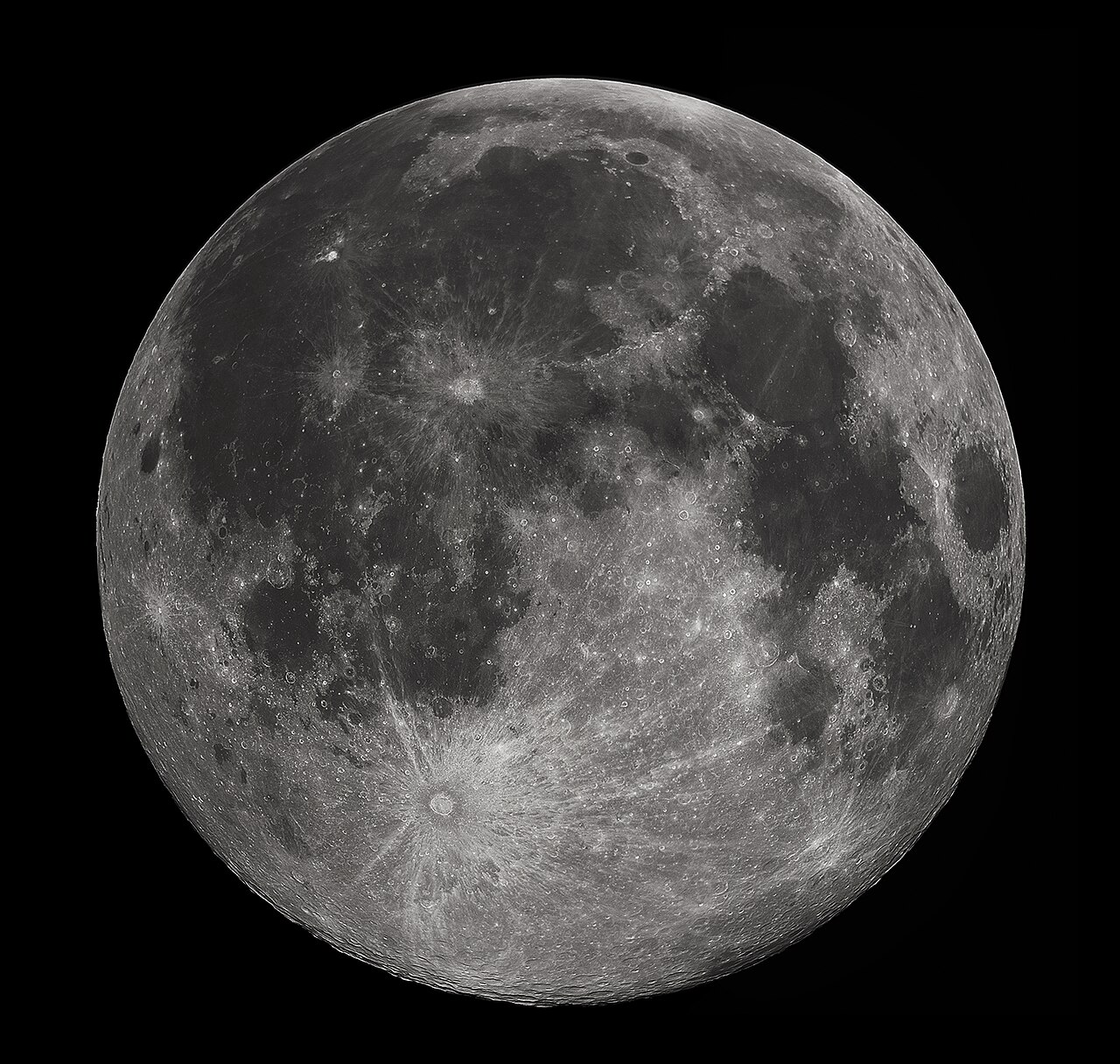
The Roman army was badly defeated at Antioch in 613. In 622, nine years after the Romans' defeat, the two forces met on Armenian soil, and the result was the decisive victory of the Romans over the Persians, for the first time after the Romans' defeat in 613. The prophecy was fulfilled just as God had said in the Qur'an.
(5) Miracles Performed by the Prophet Muhammad
35Many miracles were performed by the Prophet Muhammad (PBUH) by God's permission. These miracles were witnessed by many people. For example:
- The splitting of the moon: When the unbelievers in Makkah asked the Prophet Muhammad (PBUH) to show them a miracle, he showed them the splitting of the moon.
- Water from his fingers: Another miracle was the flowing of water through Muhammad's (PBUH) fingers when his companions got thirsty and had no water except a little in a vessel. So, Muhammad (PBUH) put his hand in the vessel, and the water started gushing out between his fingers. They were one thousand five hundred companions.
(6) The Simple Life of Muhammad
36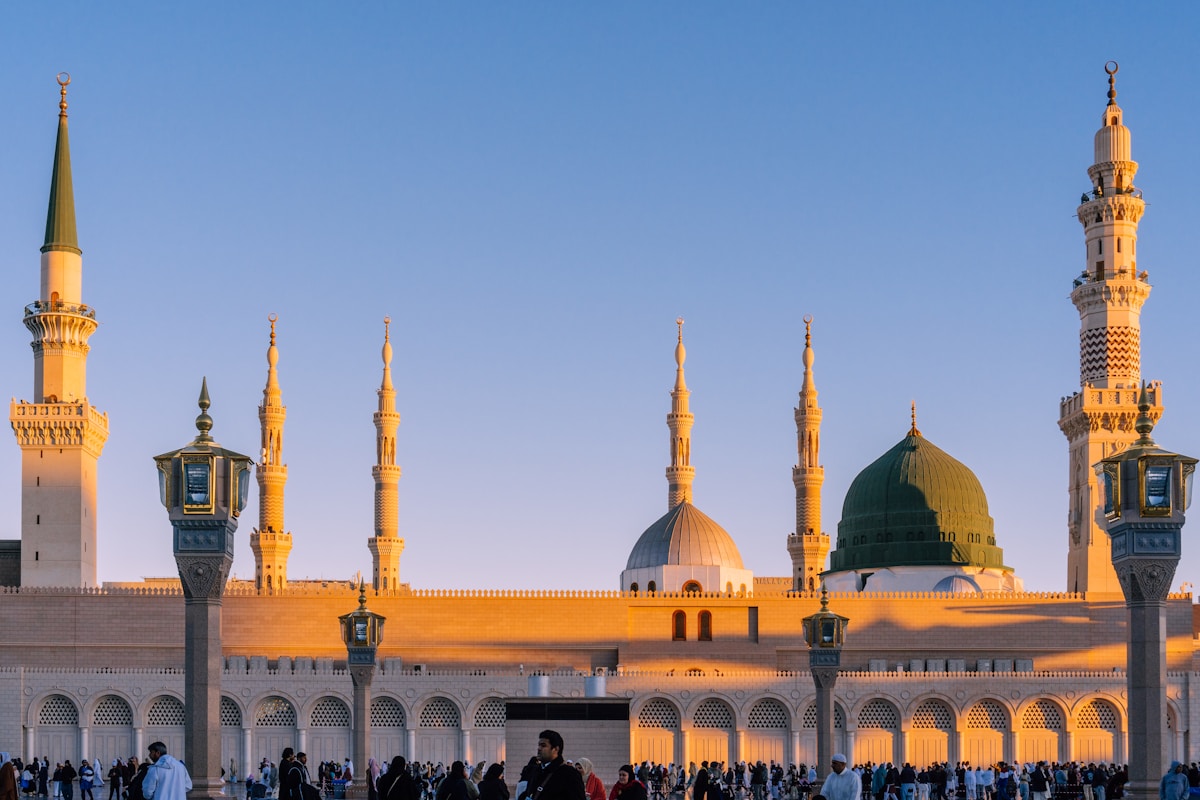
If we compare the life of Muhammad (PBUH) before his mission as a prophet and his life after he began his mission, we will conclude that it is beyond reason to think that Muhammad (PBUH) was a false prophet who claimed prophethood to attain material gains, greatness, glory, or power.
Before his mission, he had no financial worries. As a successful merchant, Muhammad (PBUH) drew a satisfactory income. After his mission as a prophet and because of it, he became worse off materially. To clarify this more, let us browse the following sayings on his life:
Muhammad (PBUH) lived this hard life till he died although the Muslim treasury was at his disposal, the greater part of the Arabian Peninsula was Muslim before he died, and the Muslims were victorious after eighteen years of his mission.
Is it possible that Muhammad (PBUH) might have claimed prophethood in order to attain status, greatness, and power? The desire to enjoy status and power is usually associated with good food, fancy clothing, monumental palaces, colorful guards, and indisputable authority. Do any of these indicators apply to Muhammad (PBUH)? A few glimpses of his life that may help answer this question follow.
Despite his responsibilities as a prophet, a teacher, a statesman, and a judge, Muhammad (PBUH) used to milk his goat, mend his clothes, repair his shoes, help with the household work, and visit poor people when they got sick. He also helped his companions in digging a trench by moving sand with them. His life was an amazing model of simplicity and humbleness.
Muhammad's (PBUH) followers loved him, respected him, and trusted him to an amazing extent. Yet he continued to emphasize that deification should be directed to God and not to him personally. Anas, one of Muhammad's (PBUH) companions, said that there was no person whom they loved more than Muhammad (PBUH), yet when he came to them, they did not stand up for him because he hated their standing up for him, as other people do with their great people.
The Offer Muhammad Refused
37Long before there was any prospect of success for Islam and at the outset of a long and painful era of torture, suffering, and persecution of Muhammad (PBUH) and his followers, he received an interesting offer. An envoy of the pagan leaders, Otba, came to him saying: "...If you want money, we will collect enough money for you so that you will be the richest one of us. If you want leadership, we will take you as our leader and never decide on any matter without your approval. If you want a kingdom, we will crown you king over us..." Only one concession was required from Muhammad (PBUH) in return for that, to give up calling people to Islam and worshipping God alone without any partner. Wouldn't this offer be tempting to one pursuing worldly benefit? Was Muhammad (PBUH) hesitant when the offer was made? Did he turn it down as a bargaining strategy leaving the door open for a better offer? The following was his answer: In the Name of God, the Most Gracious, the Most Merciful. And he recited to Otba the verses of the Qur'an 41:1-38. The following are some of these verses:
On another occasion and in response to his uncle's plea to stop calling people to Islam, Muhammad's (PBUH) answer was as decisive and sincere:
Muhammad (PBUH) and his few followers did not only suffer from persecution for thirteen years but the unbelievers even tried to kill Muhammad (PBUH) several times. On one occasion they attempted to kill him by dropping a large boulder, which could barely be lifted, on his head. Another time they tried to kill him by poisoning his food.
What could justify such a life of suffering and sacrifice even after he was fully triumphant over his adversaries? What could explain the humbleness and nobility which he demonstrated in his most glorious moments when he insisted that success is due only to God's help and not to his own genius? Are these the characteristics of a power-hungry or a self-centered man?
(7) The Phenomenal Growth of Islam
38At the end of this chapter, it may be appropriate to point out an important indication of the truth of Islam. It is well known that in the USA and the whole world, Islam is the fastest-growing religion. The following are some observations on this phenomenon:
- "Islam is the fastest-growing religion in America, a guide and pillar of stability for many of our people..." (Hillary Rodham Clinton, Los Angeles Times)
- "Moslems are the world's fastest-growing group..." (The Population Reference Bureau, USA Today)
- "...Islam is the fastest-growing religion in the country." (Geraldine Baum, Newsday Religion Writer, Newsday)
- "Islam, the fastest-growing religion in the United States..." (Ari L. Goldman, New York Times)
This phenomenon indicates that Islam is truly a religion from God. It is unreasonable to think that so many Americans and people from different countries have converted to Islam without careful consideration and deep contemplation before concluding that Islam is true. These converts have come from different countries, classes, races, and walks of life. They include scientists, professors, philosophers, journalists, politicians, actors, and athletes.
The points mentioned in this chapter constitute only some of the evidence supporting the belief that the Qur'an is the literal word of God, that Muhammad (PBUH) is truly a prophet sent by God, and that Islam is truly a religion from God.
Some Benefits of Islam
Benefits of Islam
39
Islam provides many benefits for the individual and the society. This chapter mentions some of the benefits gained through Islam for the individual:
(1) The Door to Eternal Paradise
40God has said in the Qur'an:
God has also said:
The Prophet Muhammad (PBUH) told us that the lowest in rank among the dwellers of Paradise will have ten times the like of this world, and he or she will have whatever he or she desires and ten times like it.
If you enter Paradise, you will live a very happy life without sickness, pain, sadness, or death; God will be pleased with you; and you will live there forever.
God has said in the Qur'an:
(2) Salvation from Hellfire
41
God has said in the Qur'an:
So, this life is our only chance to win Paradise and to escape from Hellfire, because if someone dies in disbelief, he will not have another chance to come back to this world to believe. As God has said in the Qur'an about what is going to happen for the unbelievers on the Day of Judgment:
But no one will have this second opportunity.
(3) Real Happiness and Inner Peace
42
Real happiness and peace can be found in submitting to the commands of the Creator and the Sustainer of this world. God has said in the Qur'an:
On the other hand, the one who turns away from the Qur'an will have a life of hardship in this world. God has said:
This may explain why some people commit suicide while they enjoy the material comfort money can buy. For example, look at Cat Stevens (now Yusuf Islam), formerly a famous pop singer who used to earn sometimes more than $150,000 a night. After he converted to Islam, he found true happiness and peace, which he had not found in material success.
(4) Forgiveness for All Previous Sins
43When someone converts to Islam, God forgives all of his previous sins and evil deeds. A man called Amr came to the Prophet Muhammad (PBUH) and said: "Give me your right hand so that I may give you my pledge of loyalty." The Prophet (PBUH) stretched out his right hand. Amr withdrew his hand. The Prophet (PBUH) said: "What has happened to you, O Amr?" He replied: "I intend to lay down a condition." The Prophet (PBUH) asked: "What condition do you intend to put forward?" Amr said: "That God forgive my sins." The Prophet (PBUH) said: "Didn't you know that converting to Islam erases all previous sins?"
After converting to Islam, the person will be rewarded for his or her good and bad deeds according to the following saying of the Prophet Muhammad (PBUH):
General Information on Islam
1) Belief in God
44The religion of Islam is the acceptance of and obedience to the teachings of God which He revealed to His last prophet, Muhammad (PBUH).
Muslims believe in one, unique, incomparable God, Who has no son nor partner, and that none has the right to be worshipped but Him alone. He is the true God, and every other deity is false. He has the most magnificent names and sublime perfect attributes. No one shares His divinity, nor His attributes. In the Qur'an, God describes Himself:
No one has the right to be invoked, supplicated, prayed to, or shown any act of worship, but God alone.
God's Attributes
45God alone is the Almighty, the Creator, the Sovereign, and the Sustainer of everything in the whole universe. He manages all affairs. He stands in need of none of His creatures, and all His creatures depend on Him for all that they need. He is the All-Hearing, the All-Seeing, and the All-Knowing. In a perfect manner, His knowledge encompasses all things, the open and the secret, and the public and the private. He knows what has happened, what will happen, and how it will happen. No affair occurs in the whole world except by His will. Whatever He wills is, and whatever He does not will is not and will never be. His will is above the will of all the creatures. He has power over all things, and He is able to do everything.
God's Mercy and Justice
46He is the Most Gracious, the Most Merciful, and the Most Beneficent. In one of the sayings of the Prophet Muhammad (PBUH), we are told that God is more merciful to His creatures than a mother to her child. God is far removed from injustice and tyranny. He is All-Wise in all of His actions and decrees. If someone wants something from God, he or she can ask God directly without asking anyone else to intercede with God for him or her.
God is not Jesus, and Jesus is not God. Even Jesus himself rejected this. God has said in the Qur'an:
God Is Not a Trinity
47God is not a trinity. God has said in the Qur'an:
Islam rejects that God rested on the seventh day of the creation, that He wrestled with one of His angels, that He is an envious plotter against mankind, or that He is incarnate in any human being. Islam also rejects the attribution of any human form to God. All of these are considered blasphemous. God is the Exalted. He is far removed from every imperfection. He never becomes weary. He does not become drowsy nor does he sleep.
The Arabic Word "Allah"
48The Arabic word Allah means God (the one and only true God who created the whole universe). This word is a name for God, used by Arabic speakers, both Arab Muslims and Arab Christians. This word cannot be used to designate anything other than the one true God.
The Arabic word Allah occurs in the Qur'an more than 2150 times. In Aramaic, a language related closely to Arabic and the language that Jesus habitually spoke, God is also referred to as Allah.
2) Belief in the Angels
49Muslims believe in the existence of the angels and that they are honored creatures. The angels worship God alone, obey Him, and act only by His command. Among the angels is Gabriel, who brought down the Qur'an to Muhammad (PBUH).
3) Belief in God's Revealed Books
50Muslims believe that God revealed books to His messengers as proof for mankind and as guidance for them. Among these books is the Qur'an, which God revealed to the Prophet Muhammad (PBUH). God has guaranteed the Qur'an's protection from any corruption or distortion.
4) Belief in the Prophets and Messengers
51Muslims believe in the prophets and messengers of God, starting with Adam, including Noah, Abraham, Ishmael, Isaac, Jacob, Moses, and Jesus (peace be upon them). But God's final message to man, a reconfirmation of the eternal message, was revealed to the Prophet Muhammad (PBUH). Muslims believe that Muhammad (PBUH) is the last prophet sent by God, as God has said:
Muslims believe that all the prophets and messengers were created human beings who had none of the divine qualities of God.
5) Belief in the Day of Judgment
52Muslims believe in the Day of Judgment (the Day of Resurrection) when all people will be resurrected for God's judgment according to their beliefs and deeds.
6) Belief in Al-Qadar (Divine Predestination)
53Muslims believe in Al-Qadar, which is Divine Predestination, but this belief does not mean that human beings do not have freewill. Rather, Muslims believe that God has given human beings freewill. This means that they can choose right or wrong and that they are responsible for their choices.
The belief includes four things: 1) God knows everything. 2) God has recorded all that has happened and all that will happen. 3) Whatever God wills to happen happens, and whatever He wills not to happen does not happen. 4) God is the Creator of everything.
Is There Another Sacred Source?
54
Yes. The sunnah (what the Prophet Muhammad (PBUH) said, did, or approved of) is the second source in Islam. The sunnah is comprised of hadeeths, which are reliably transmitted reports by the Prophet Muhammad's (PBUH) companions of what he said, did, or approved of. Belief in the sunnah is a basic Islamic belief.
The Prophet (PBUH) was asked: "Messenger of God, are we rewarded for kindness towards animals?" He said: "There is a reward for kindness to every living animal or human."
What Does Islam Say About the Day of Judgment?
55
Like Christians, Muslims believe that the present life is only a trial preparation for the next realm of existence. This life is a test for each individual for the life after death. A day will come when the whole universe will be destroyed and the dead will be resurrected for judgment by God. This day is the Day of Judgment. On that day, all people will be rewarded by God according to their beliefs and deeds. Those who die while believing that "There is no true god but God, and Muhammad is the Messenger (Prophet) of God" and are Muslim will be rewarded on that day and will be admitted to Paradise forever, as God has said:
But those who die while not believing that "There is no true god but God, and Muhammad is the Messenger (Prophet) of God" or are not Muslim will lose Paradise forever and will be sent to Hellfire, as God has said:
And as He has said:
The Only Acceptable Religion
56One may ask, 'I think Islam is a good religion, but if I were to convert to Islam, my family, friends, and other people would persecute me and make fun of me. So if I don't convert to Islam, will I enter Paradise and be saved from Hellfire?'
The answer is what God has said in the preceding verse: "And whoever seeks a religion other than Islam, it will not be accepted from him and he will be one of the losers in the Hereafter."
After having sent the Prophet Muhammad (PBUH) to call people to Islam, God does not accept adherence to any religion other than Islam. God is our Creator and Sustainer. He created for us whatever is in the earth. All the blessings and good things we have are from Him. So after all this, when someone rejects belief in God, His Prophet Muhammad (PBUH), or His religion of Islam, it is just that he or she be punished in the Hereafter. Actually, the main purpose of our creation is to worship God alone and to obey Him, as God has said in the Holy Qur'an (51:56).
The Brevity of This Life
57The life in the Hereafter is a real life. It is not only spiritual, but physical as well. We will live there with our souls and bodies.
This life we live today is a very short life. The unbelievers on the Day of Judgment will think that the life they lived on earth was only a day or part of a day, as God has said:
In comparing this world with the Hereafter, Muhammad (PBUH) said: "The value of this world compared to that of the Hereafter is like what your finger brings from the sea when you put it in and then take it out." That is, the value of this world compared to that of the Hereafter is like a few drops of water compared to the sea.
How Does Someone Become a Muslim?
58
Simply by saying with conviction, "La ilaha illa Allah, Muhammadur rasoolu Allah," one converts to Islam and becomes a Muslim. This saying means "There is no true god but God (Allah), and Muhammad is the Messenger (Prophet) of God." The first part, "There is no true god but God," means that none has the right to be worshipped but God alone, and that God has neither partner nor son.
To be a Muslim, one should also:
- Believe that the Holy Qur'an is the literal word of God, revealed by Him.
- Believe that the Day of Judgment (the Day of Resurrection) is true and will come, as God promised in the Qur'an.
- Accept Islam as his or her religion.
- Not worship anything nor anyone except God.
God's Joy at Repentance
59What Is the Qur'an About?
60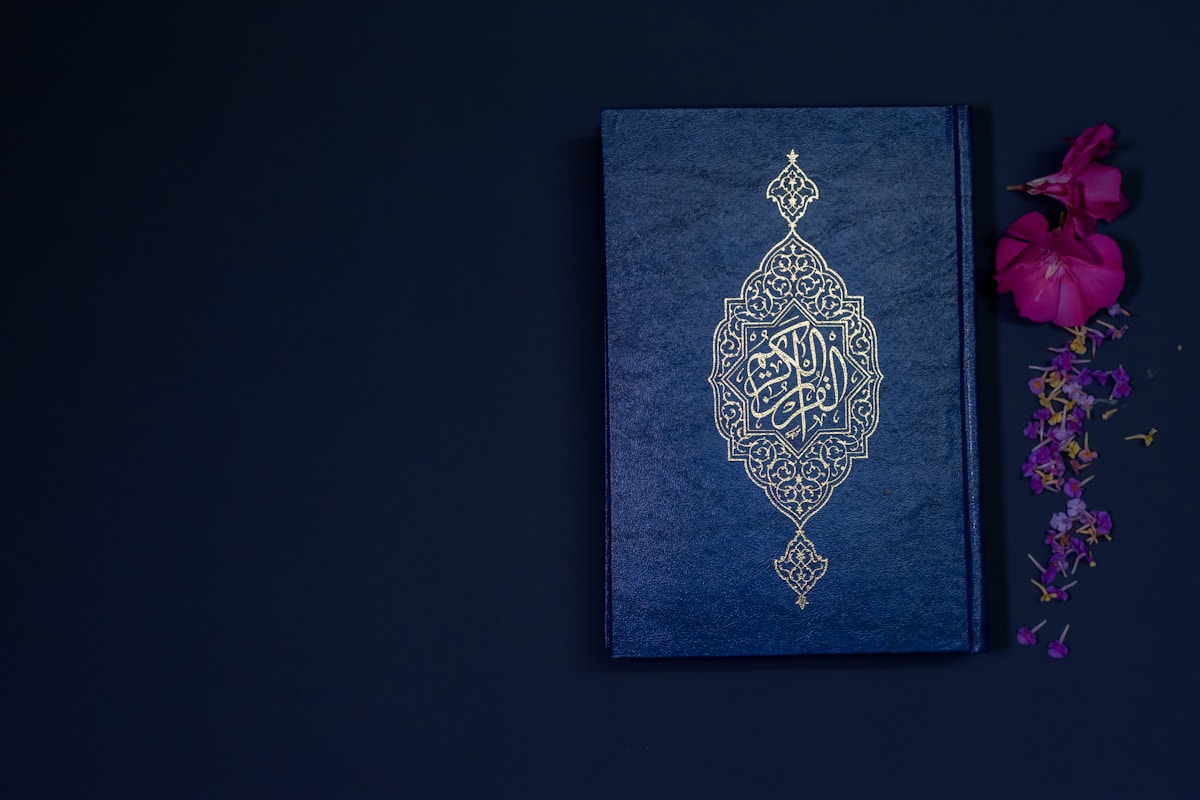
The Qur'an, the last revealed word of God, is the primary source of every Muslim's faith and practice. It deals with all the subjects which concern human beings: wisdom, doctrine, worship, transactions, law, etc., but its basic theme is the relationship between God and His creatures. At the same time, it provides guidelines and detailed teachings for a just society, proper human conduct, and an equitable economic system.
Note that the Qur'an was revealed to Muhammad (PBUH) in Arabic only. So, any Qur'anic translation, either in English or any other language, is neither a Qur'an, nor a version of the Qur'an, but rather it is only a translation of the meaning of the Qur'an. The Qur'an exists only in the Arabic in which it was revealed.
Who Is the Prophet Muhammad?
61Muhammad (PBUH) was born in Makkah in the year 570. Since his father died before his birth and his mother died shortly thereafter, he was raised by his uncle who was from the respected tribe of Quraysh. He was raised illiterate, unable to read or write, and remained so till his death. His people, before his mission as a prophet, were ignorant of science and most of them were illiterate. As he grew up, he became known to be truthful, honest, trustworthy, generous, and sincere. He was so trustworthy that they called him the Trustworthy. Muhammad (PBUH) was very religious, and he had long detested the decadence and idolatry of his society.
At the age of forty, Muhammad (PBUH) received his first revelation from God through the Angel Gabriel. The revelations continued for twenty-three years, and they are collectively known as the Qur'an.
As soon as he began to recite the Qur'an and to preach the truth which God had revealed to him, he and his small group of followers suffered persecution from unbelievers. The persecution grew so fierce that in the year 622 God gave them the command to emigrate. This emigration from Makkah to the city of Madinah, some 260 miles to the north, marks the beginning of the Muslim calendar.
The Spread of Islam
62After several years, Muhammad (PBUH) and his followers were able to return to Makkah, where they forgave their enemies. Before Muhammad (PBUH) died, at the age of sixty-three, the greater part of the Arabian Peninsula had become Muslim, and within a century of his death, Islam had spread to Spain in the West and as far East as China.
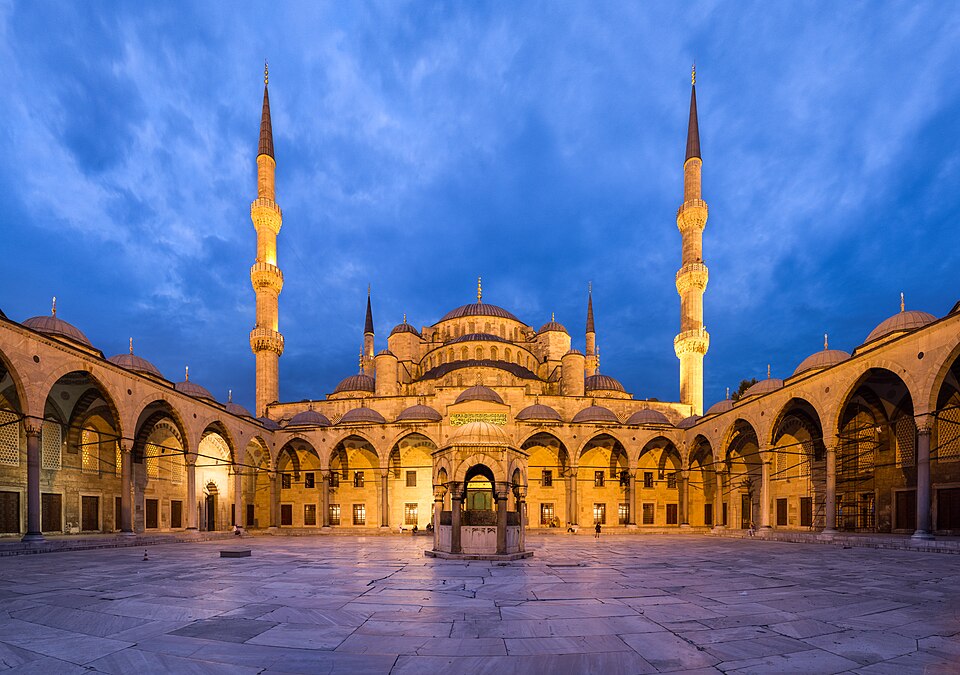
Among the reasons for the rapid and peaceful spread of Islam was the truth and clarity of its doctrine. Islam calls for faith in only one God, Who is the only one worthy of worship.
The Prophet Muhammad (PBUH) was a perfect example of an honest, just, merciful, compassionate, truthful, and brave human being. Though he was a man, he was far removed from all evil characteristics and strove solely for the sake of God and His reward in the Hereafter. Moreover, in all his actions and dealings, he was ever mindful and fearful of God.
Neither Muhammad (PBUH) nor Jesus came to change the basic doctrine of the belief in one God, brought by earlier prophets, but rather to confirm and renew it.
How Did Islam Affect the Development of Science?
63Islam instructs man to use his powers of intelligence and observation. Within a few years of the spread of Islam, great civilizations and universities were flourishing. The synthesis of Eastern and Western ideas, and of new thought with old, brought about great advances in medicine, mathematics, physics, astronomy, geography, architecture, art, literature, and history.
Muslim Contributions to Science
64Many crucial systems, such as algebra, the Arabic numerals, and the concept of zero (vital to the advancement of mathematics), were transmitted to medieval Europe from the Muslim world. Sophisticated instruments which were to make possible the European voyages of discovery, such as the astrolabe, the quadrant, and good navigational maps, were also developed by Muslims.

Muslim physicians paid much attention to surgery and developed many surgical instruments. They also made important advances in optics, chemistry, and pharmacology.
What Do Muslims Believe about Jesus?
65
Muslims respect and revere Jesus (peace be upon him). They consider him one of the greatest of God's messengers to mankind. The Qur'an confirms his virgin birth, and a chapter of the Qur'an is entitled 'Maryam' (Mary). The Qur'an describes the birth of Jesus as follows:
Jesus was born miraculously by the command of God which had brought Adam into being without a father. God has said:
During his prophetic mission, Jesus performed many miracles. God tells us that Jesus said:
Muslims believe that Jesus was not crucified. It was the plan of Jesus' enemies to crucify him, but God saved him and raised him up to Him. And the likeness of Jesus was put over another man. Jesus' enemies took this man and crucified him, thinking that he was Jesus. God has said:
What Does Islam Say about Terrorism?
66Islam, a religion of mercy, does not permit terrorism. In the Qur'an, God has said:
The Prophet Muhammad (PBUH) used to prohibit soldiers from killing women and children, and he would advise them: "...Do not betray, do not be excessive, do not kill a newborn child." And he also said:
Also, the Prophet Muhammad (PBUH) has forbidden punishment with fire.
He once listed murder as the second of the major sins, and he even warned that on the Day of Judgment, the first cases to be adjudicated between people on the Day of Judgment will be those of bloodshed.
In light of Islamic texts, the act of inciting terror in the hearts of defenseless civilians, the wholesale destruction of buildings and properties, the bombing and maiming of innocent men, women, and children are all forbidden and detestable acts according to Islam and the Muslims.
Muslims follow a religion of peace, mercy, and forgiveness, and the vast majority have nothing to do with the violent events some have associated with Muslims. If an individual Muslim were to commit an act of terrorism, this person would be guilty of violating the laws of Islam.
Kindness to Animals
67
Muslims are even encouraged to be kind to animals and are forbidden to hurt them. Once the Prophet Muhammad (PBUH) said:
He also said that a man gave a very thirsty dog a drink, so God forgave his sins for this action. The Prophet (PBUH) was asked: "Messenger of God, are we rewarded for kindness towards animals?" He said: "There is a reward for kindness to every living animal or human."
Additionally, while taking the life of an animal for food, Muslims are commanded to do so in a manner that causes the least amount of fright and suffering possible. The Prophet Muhammad (PBUH) said:
Human Rights and Justice in Islam
68
Islam provides many human rights for the individual. The following are some of these human rights that Islam protects.
The life and property of all citizens in an Islamic state are considered sacred, whether a person is Muslim or not. Islam also protects honor. So, in Islam, insulting others or making fun of them is not allowed.
Racism is not allowed in Islam, for the Qur'an speaks of human equality in the following terms:
Islam rejects certain individuals or nations being favored because of their wealth, power, or race. God created human beings as equals who are to be distinguished from each other only on the basis of their faith and piety.
One of the major problems facing mankind today is racism. The developed world can send a man to the moon but cannot stop man from hating and fighting his fellow man. Ever since the days of the Prophet Muhammad (PBUH), Islam has provided a vivid example of how racism can be ended. The annual pilgrimage (Hajj) to Makkah shows the real Islamic brotherhood of all races and nations, when about two million Muslims from all over the world come to Makkah to perform the pilgrimage.
Islam is a religion of justice. God has said:
We should even be just with those we hate, as God has said:
And those who have not gotten their rights (i.e. what they have a just claim to) in this life will receive them on the Day of Judgment, as the Prophet (PBUH) said: "On the Day of Judgment, rights will be given to those to whom they are due (and wrongs will be redressed)..."
What Is the Status of Women in Islam?
69
Islam sees a woman, whether single or married, as an individual in her own right, with the right to own and dispose of her property and earnings without any guardianship over her (whether that be her father, husband, or anyone else). She has the right to buy and sell, give gifts and charity, and may spend her money as she pleases. A marriage dowry is given by the groom to the bride for her own personal use, and she keeps her own family name rather than taking her husband's.
Islam encourages the husband to treat his wife well, as the Prophet Muhammad (PBUH) said: "The best among you are those who are best to their wives."
Mothers are highly honored in Islam. Islam recommends treating them in the best way. A man came to the Prophet Muhammad (PBUH) and said: "O Messenger of God! Who among the people is the most worthy of my good companionship?" The Prophet said: "Your mother." The man said: "Then who?" The Prophet said: "Then your mother." The man asked: "Then who?" The Prophet said: "Then your mother." The man asked again: "Then who?" The Prophet said: "Then your father."
The family, which is the basic unit of civilization, is now disintegrating. Islam's family system brings the rights of the husband, wife, children, and relatives into a fine equilibrium. It nourishes unselfish behavior, generosity, and love in the framework of a well-organized family system.
The peace and security offered by a stable family unit is greatly valued, and it is seen as essential for the spiritual growth of its members. A harmonious social order is created by the existence of extended families and by treasuring children.
How Do Muslims Treat the Elderly?
70In the Islamic world, one rarely finds "old people's homes." The strain of caring for one's parents in this most difficult time of their lives is considered an honor and a blessing and an opportunity for great spiritual growth. In Islam, it is not enough that we only pray for our parents, but we should act with limitless compassion, remembering that when we were helpless children, they preferred us to themselves. Mothers are particularly honored. When Muslim parents reach old age, they are treated mercifully, with kindness and selflessness.
In Islam, serving one's parents is a duty second to prayer, and it is their right to expect it. It is considered despicable to express any irritation when, through no fault of their own, the old become difficult. God has said:
What Are the Five Pillars of Islam?
71The Five Pillars of Islam are the framework of a Muslim's life. They are the testimony of faith, prayer, giving zakat (support of the needy), fasting during the month of Ramadan, and the pilgrimage to Makkah once in a lifetime for those who are able.
The Testimony of Faith
The testimony of faith is saying with conviction, "La ilaha illa Allah, Muhammadur rasoolu Allah." This saying means "There is no true god but God (Allah), and Muhammad is the Messenger (Prophet) of God." The first part, "There is no true god but God," means that none has the right to be worshipped but God alone, and that God has neither partner nor son. This testimony of faith is called the Shahada, a simple formula which should be said with conviction in order to convert to Islam. The testimony of faith is the most important pillar of Islam.
Prayer
Muslims perform five prayers a day. Each prayer does not take more than a few minutes. Prayer in Islam is a direct link between the worshipper and God. There are no intermediaries between God and the worshipper.
Giving Zakat (Support of the Needy)
All things belong to God, and wealth is therefore held by human beings in trust. The original meaning of the word zakat is both 'purification' and 'growth.' Giving zakat means giving a specified percentage on certain properties to certain classes of needy people. The percentage which is due on gold, silver, and cash funds that have reached the amount of about 85 grams of gold and held in possession for one lunar year is two and a half percent. Our possessions are purified by setting aside a proportion for those in need, and, like the pruning of plants, this cutting back balances and encourages new growth.
Fasting the Month of Ramadan
Every year in the month of Ramadan, all Muslims fast from dawn until sundown, abstaining from food, drink, and sexual relations. Although the fast is beneficial to health, it is regarded principally as a method of spiritual self-purification. By cutting oneself off from worldly comforts, even for a short time, a fasting person gains true sympathy with those who go hungry, as well as growth in his or her spiritual life.
The Pilgrimage to Makkah
The annual pilgrimage (Hajj) to Makkah is an obligation once in a lifetime for those who are physically and financially able to perform it. About two million people go to Makkah each year from every corner of the globe. Although Makkah is always filled with visitors, the annual Hajj is performed in the twelfth month of the Islamic calendar. Male pilgrims wear special simple clothes which strip away distinctions of class and culture so that all stand equal before God.
The rites of the Hajj include circling the Kaaba seven times and going seven times between the hillocks of Safa and Marwa, as Hagar did during her search for water. Then the pilgrims stand together in Arafa and ask God for what they wish and for His forgiveness, in what is often thought of as a preview of the Day of Judgment.
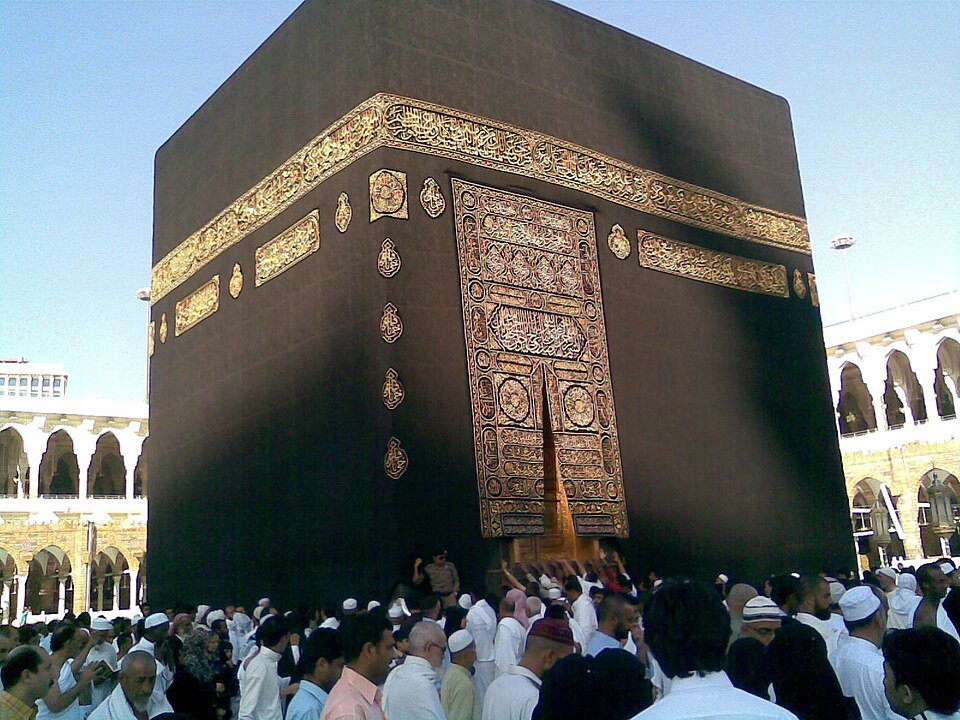
The close of the Hajj is marked by a festival, the Eid Al-Adha, which is celebrated with prayers. This, and the Eid al-Fitr, a feast-day commemorating the end of Ramadan, are the two annual festivals of the Muslim calendar.